

Have you been prescribed BLENREP in combination with pomalidomide and dexamethasone (BPd)?
If you are unsure what treatment combination you are on, please check with your cancer care team.
On this page
- How is your BLENREP treatment given?
- Your treatment schedule with BLENREP
- Understanding possible side effects of your treatment
- Monitoring your eye health during treatment
How is your BLENREP treatment given?
Alongside BLENREP, you will receive two other medications. These are pomalidomide and dexamethasone.
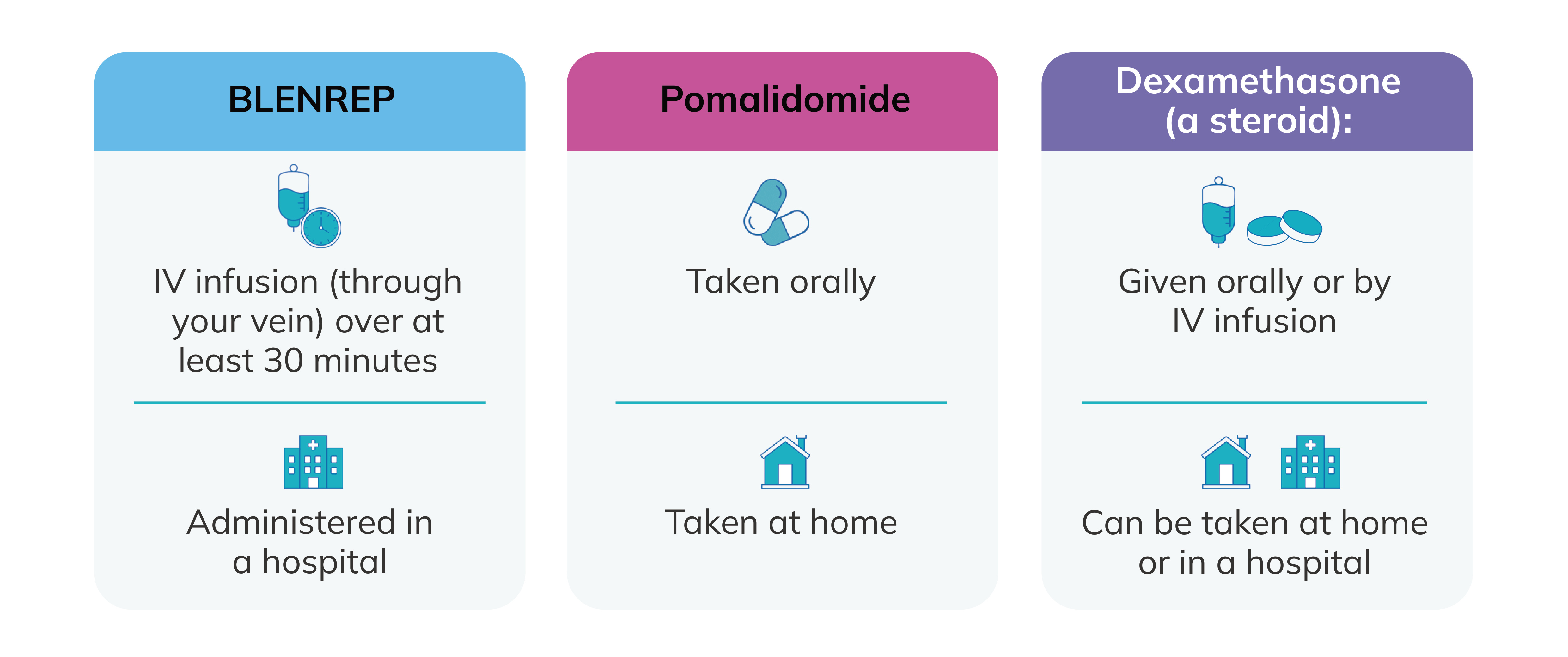
Your treatment cycle with BLENREP
BLENREP in combination with pomalidomide and dexamethasone is given in 28-day cycles.
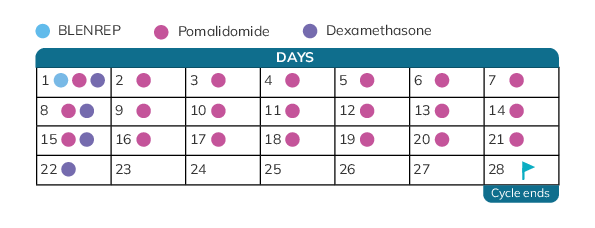
This cycle will continue until your doctor or cancer care team tells you to stop.
Your doctor may change the dose frequency or total number of treatment cycles, depending on your response to the treatment and if you experience any side effects. For information on side effects, please see the sections below.
It is very important to go to all your appointments to make sure your treatment is working. If you miss a BLENREP appointment, contact your doctor or hospital to make another one as soon as possible.
Understanding the possible side effects of BLENREP
Like all medicines, BLENREP can cause side effects, although not everybody gets them.
These side effects are very common, meaning they may affect more than one in ten people.
- Eye-related problems, including decreased vision, changes to the surface of your eye, blurred vision, dry eyes, feeling of something in your eye (foreign body sensation in eyes), eye irritation, sensitivity to light (photophobia), eye pain, and problems with vision
- Low number of a type of blood cell called platelets which help to clot blood (thrombocytopenia), which may cause abnormal bruising and bleeding
- Low number of white blood cells in the blood which help to fight infections (neutropenia)
- Cold or cold-like symptoms such as cough, runny nose or sore throat (upper respiratory tract infection)
- Infection of the lungs (pneumonia)
- Feeling tired (fatigue)
- Fever
- Low number of red blood cells which carry oxygen in the blood (anaemia), causing weakness and fatigue
- Abnormal blood tests indicating liver problems (alanine aminotransferase and aspartate aminotransferase)
- Diarrhoea
- Nausea
This is not a full list of side effects associated with BLENREP, please refer to the Patient Information Leaflet for more details.
BLENREP has been known to cause some severe side effects. Let your doctor know if:
- You develop any breathing-related symptoms that worry you
- You experience any bruising or bleed that is unusual
- You experience any symptoms within 24 hours after your BLENREP infusion such as flushing, chills, fever, difficulty breathing, rapid heartbeat, or a drop in blood pressure
- You experience worsening tiredness, yellowing of the skin or white part of the eyes and/or dark urine.
Monitoring your eye health during treatment
BLENREP might affect the surface of your eyes. These changes can happen even if you don’t feel anything and may only be found during an eye exam.
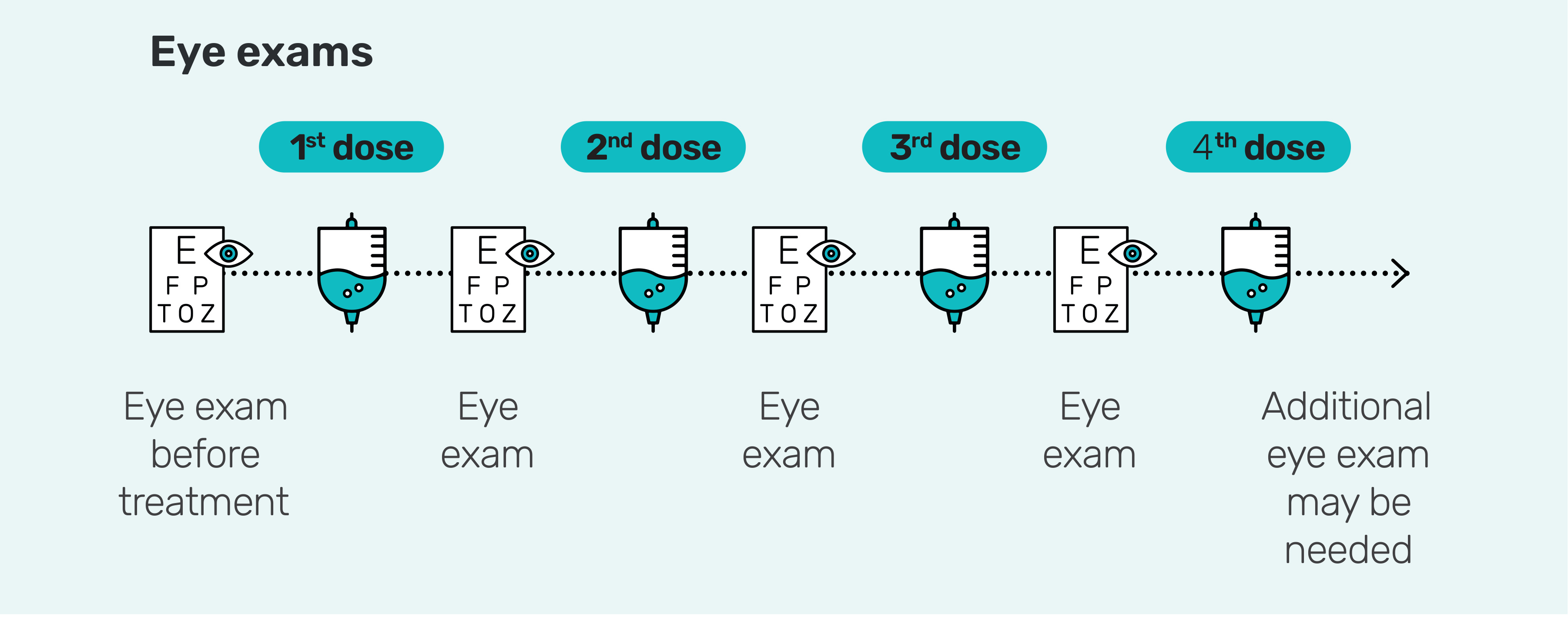
You will need to have an eye exam before your first four BLENREP doses. Your doctor will tell you where to go for your exam. Your doctor may request further eye exams while you are on treatment.
Remember to use preservative-free artificial tears. These can be provided by your care team or bought at a pharmacy. You should use these 4 times a day during treatment with BLENREP.
You should let your doctor know if:
- You use contact lenses. You cannot use contact lenses while on treatment with BLENREP
- You are a driver, as BLENREP may cause problems with your eyes that may affect your ability to drive
During the exam, your doctor will check your eyes to see if there are any changes to your eyes while on treatment with BLENREP.

If you miss an eye appointment, make another appointment as soon as possible, and let your doctor know when your new appointment will be. Your BLENREP treatment schedule may need to be adjusted.
If you experience any side effects, talk to your doctor, nurse or pharmacist. This includes any possible side effects not listed in the package leaflet.
You can also report side effects directly via the Yellow Card Scheme at: https://yellowcard.mhra.gov.uk or search for MHRA Yellow Card in the Google Play or Apple App Store. By reporting side effects, you can help provide more information on the safety of this medicine. Adverse events should also be reported to GlaxoSmithKline on 0800 221 441 or uksafety@gsk.com.
▼ This medicine is subject to additional monitoring. This will allow quick identification of new safety information. You can help by reporting any side effects you may get. See information in paragraph above to see how to report side effects.
BLENREP is a registered trademark of the GlaxoSmithKline group of companies
